Karedon
Process Document   Rev. 07 — March 2026

Research
Framework

How the journal selects, evaluates, and structures its content. The process behind every published entry at Karedon.
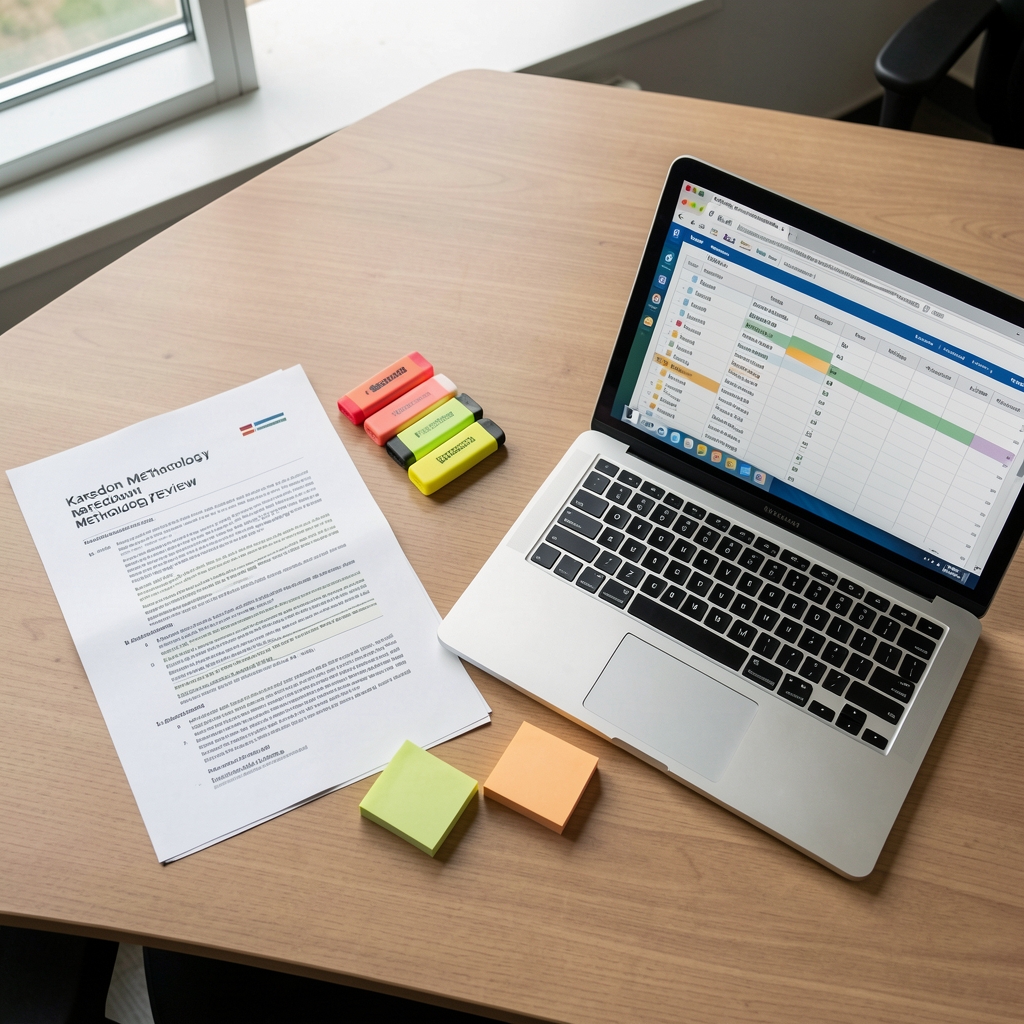
Research materials for Karedon methodology review: printed academic papers, highlighters, sticky notes, and a laptop showing nutritional journal database, viewed from above on a large desk
Process Documentation — Rev. 07, 2026
01
Overview

A transparent process, publicly documented.

The methodology at Karedon was formalised in 2022 and has been revised seven times since. Each revision has been in the direction of greater precision — tighter sourcing standards, more explicit review criteria, and clearer distinctions between field observation and published research.

This page describes the current version of the process in full. Nothing is withheld. The reasoning is straightforward: a reader who understands the methodology is in a better position to evaluate the guidance. That is the point of publishing it.

Karedon is an independent wellness resource focused on everyday nutrition and active lifestyle practices for men. The content is not affiliated with any governmental or institutional body.

02
Process Steps

Six stages, every entry.

Every piece published on Karedon passes through the same six-stage process. No exceptions. The process is applied equally to a short field note and a full-length reference article.

01

Topic Identification

Topics are sourced from three channels: personal observation in the field log, reader enquiries received via the contact form, and gaps identified during the editorial review of existing content. Topics that overlap with stop-word categories — anything requiring a referral to a qualified professional — are routed to the disclaimer framework rather than developed as editorial content.

Input Sources
  • Field observation log
  • Reader contact submissions
  • Content gap analysis, quarterly
02

Literature Review

The research editor assembles a minimum of five peer-reviewed sources per topic. Sources must be published within the last ten years unless historical context specifically requires older material. Databases used include PubMed, Semantic Scholar, and the WHO Global Health Library. Grey literature is not used as a primary source.

Source Standards
  • Minimum 5 peer-reviewed sources
  • Published within 10 years
  • No grey literature as primary
03

Field Correlation

Research findings are mapped against the personal observation log. Correlations — where observed outcomes align with published findings — are noted. Divergences are noted with equal prominence. The journal does not selectively report findings that confirm prior assumptions. Divergences between field observation and published research are among the most useful entries.

Correlation Protocol
  • Alignment documented
  • Divergence documented equally
  • No selective omission
04

Editorial Draft

The wellness professional drafts the piece in full. The draft distinguishes clearly between evidence-informed guidance, field observation, and editorial opinion. Each section carries an appropriate label. The draft is written to be understood by an intelligent non-specialist reader without simplifying the underlying material.

Draft Labelling
  • Evidence-informed sections
  • Field observation sections
  • Editorial opinion sections
05

Editorial Review

The draft passes to the exercise-science researcher for accuracy review and then to the content editor for clarity and language review. Both reviewers produce written notes. Changes are tracked. The piece is not published until both reviewers have signed off in writing. This is a non-negotiable step regardless of urgency.

Review Gate
  • Accuracy review (science researcher)
  • Language review (content editor)
  • Written sign-off required
06

Publication & Archive

The piece is published with its review date, source list, and revision history visible. All archived entries remain accessible. Corrections are noted inline with a visible revision marker and date. Nothing is silently deleted or altered. This archive policy is a structural part of the journal's commitment to accuracy.

Archive Standards
  • Review date visible
  • Source list attached
  • Corrections inline, dated
03
Sourcing

Source selection and supplier standards.

When Karedon references supplement formulations or nutritional products, the sourcing context is described in detail. Active ingredients referenced in the journal are selected based on published nutritional research and undergo independent batch verification for quality and labelling accuracy.

Active ingredients are sourced from documented suppliers, with each batch accompanied by a certificate of composition. Sourcing prioritises suppliers whose facilities maintain food-grade processing standards. This applies both to external products discussed editorially and to the journal's own nutritional formulation references.

Third-party verification is used for all batch-coded formulations referenced on this site. The verification is independent — no manufacturer-provided data is cited without a separate confirmation from an accredited third party.

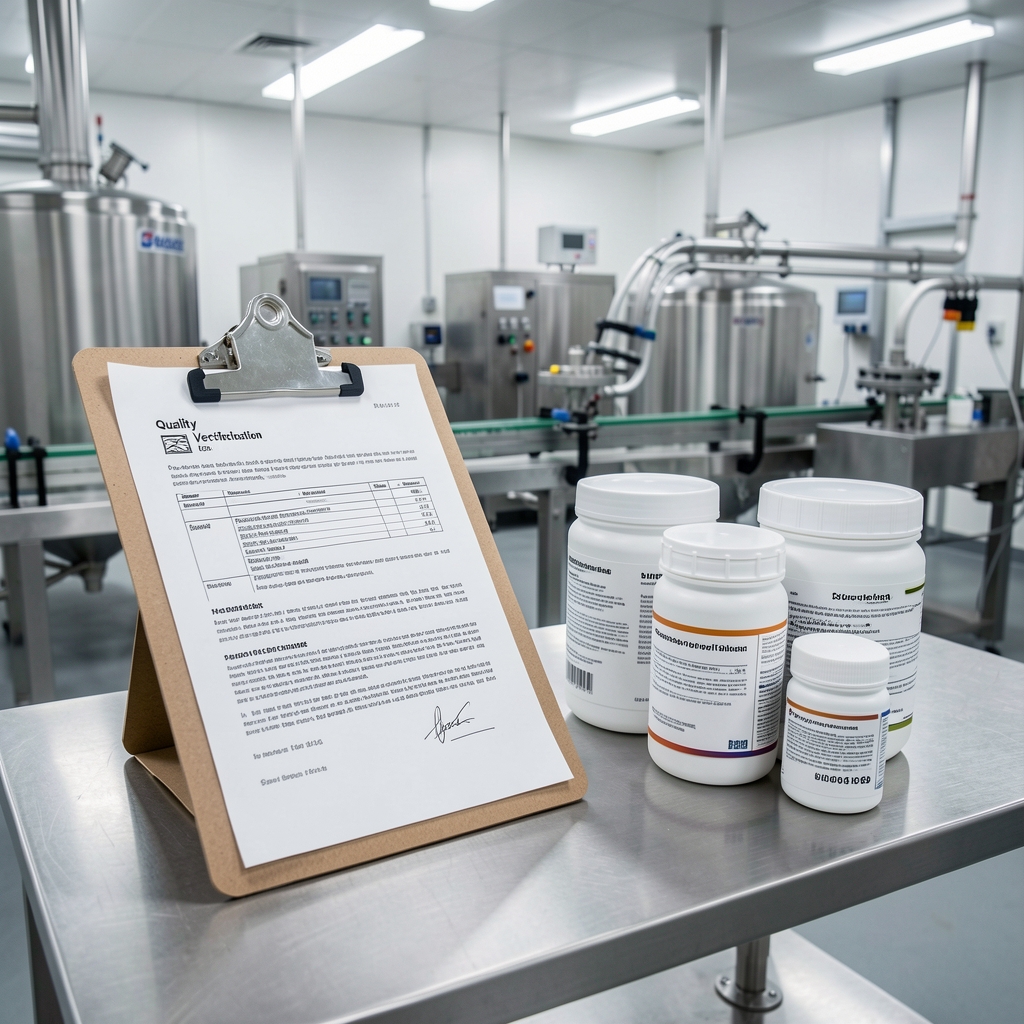
Quality verification documentation on a clipboard next to supplement containers in a food-grade processing environment with bright, controlled laboratory lighting
Batch Verification — Supplier Doc 14-B, 2026
3rd
Party Verified
COA
Per Batch
FG
Food-Grade
04
Nutrition Ref

Nutrient reference framework.

When nutritional roles are described in Karedon content, the journal uses a constrained vocabulary. Below is the standard reference list.

Zinc

Supports normal cognitive function and immune health.

Magnesium

Contributes to normal energy metabolism and reduces tiredness.

Vitamin D3

Supports normal function of the immune system.

Vitamin B12

Contributes to normal energy production.

Selenium

Contributes to protection of cells from oxidative stress.

CoQ10

Involved in cellular energy production.

Iron

Contributes to normal oxygen transport in the body.

Vitamin C

Supports the normal function of the immune system.

We recommend speaking with a qualified wellness or nutrition professional before introducing any supplement to your daily routine, particularly if you have specific dietary requirements. The above descriptions reflect established nutritional science literature and are used consistently across all Karedon content.

05
Verification

How errors are caught and corrected.

The six-stage process reduces errors significantly, but does not eliminate them. When a reader identifies a factual error, the journal has a defined correction protocol: the error is assessed within three working days, a correction note is added inline, and the revision history is updated.

Errors of interpretation — where the research cited does not fully support the claim made — are corrected with the same urgency as factual errors. The journal does not distinguish between types of error when it comes to speed of correction.

All correction requests are received via the contact form. Anonymous corrections are accepted. The identity of the person who identified the error is never published.

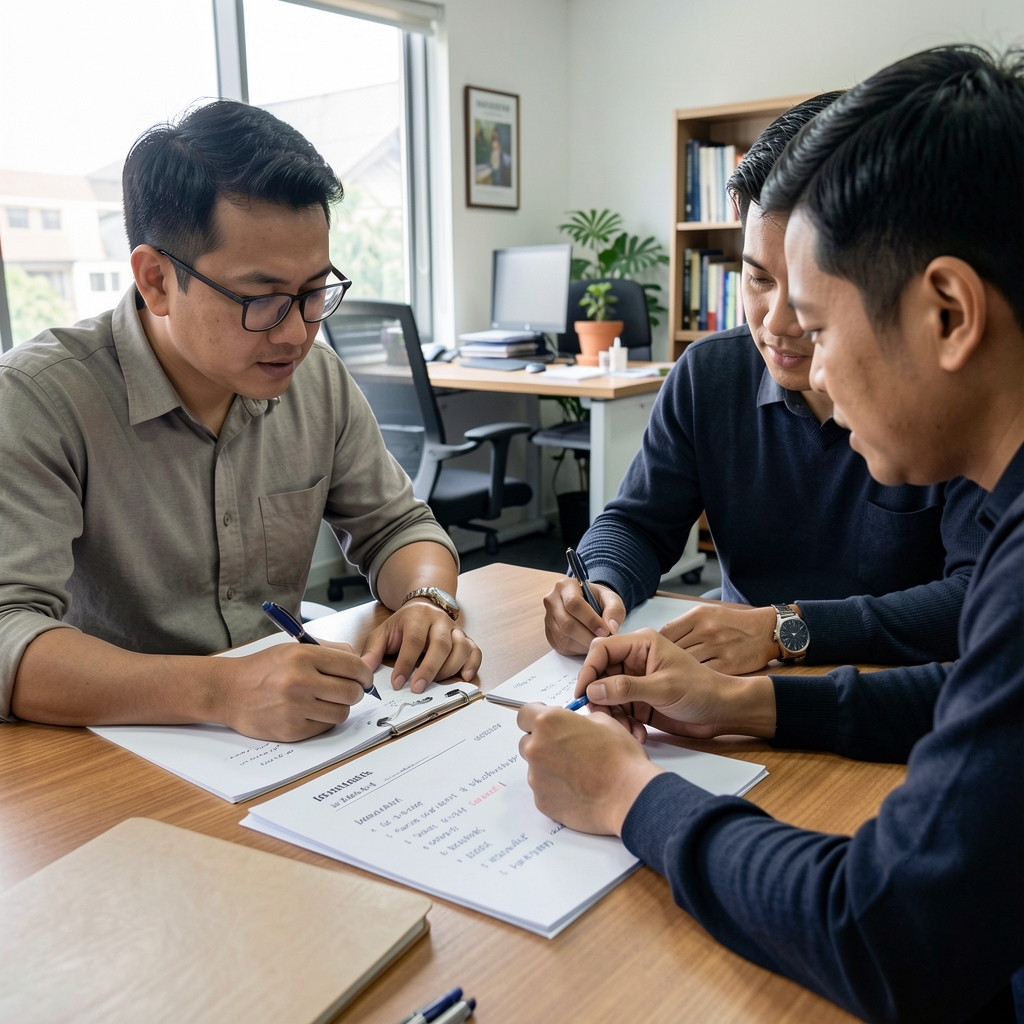
Two people reviewing a printed document at a Jakarta editorial office table, pens in hand, revision notes visible on the pages, professional collaborative review session
Editorial Review Session — Studio, Feb 2026
06
Scope Limits

What this journal does not address.

Karedon's content is general in nature. It does not provide individualised nutritional or fitness guidance. Readers with specific dietary requirements, particular health concerns, or any situation that requires individual assessment should engage with a qualified wellness or nutrition professional. This journal provides a framework; individual application is a separate matter.
The journal does not address situations where a person requires a specialist's assessment. If a reader has a specific concern that falls outside general wellness — anything that would ordinarily prompt a visit to a qualified professional — Karedon's content is not the appropriate resource. The journal is explicitly not a substitute for that kind of engagement.
The journal does not cover protocols designed to produce rapid or dramatic body composition changes. This is not a product restriction — it is a methodology position. The research consistently indicates that rapid-change approaches produce unstable long-term outcomes. Karedon is interested in documentation over time. Short-burst frameworks are outside that scope.
Karedon does not endorse specific products. When supplement or nutritional formulations are referenced in editorial content, they are described in terms of their compositional properties — not as recommendations. No brand partnerships exist. No affiliate revenue model is in practice. The editorial process is not influenced by commercial considerations.
07

Questions about process.

If a reader has a question about how a specific piece was researched, how a source was selected, or why a particular claim was included or excluded, the contact form is the appropriate channel.

All process-related enquiries receive a response from the editorial team directly. Questions are taken seriously and answered specifically — not with a general acknowledgement.

Contact the Editorial Team